What You Carry Home: Rethinking the Art of the Travel Keepsake
Somewhere in America, there is a junk drawer. Maybe it's in your kitchen, maybe it's buried in a closet. And somewhere inside that drawer is a small ceramic something — a painted turtle from Cancún, a snow globe from San Francisco, a magnet shaped like a lobster from Maine — that you absolutely had to have at the time. You paid $12 for it at an airport gift shop. You haven't thought about it since.
We've all been there. The souvenir impulse is real, and it's deeply human. We want proof. We want a physical anchor to tie us to an experience that felt too big, too fleeting, too alive to just let dissolve into memory. The problem isn't the impulse — the problem is where we point it.
The Airport Gift Shop Is Not the Answer
Here's something worth sitting with: most of what gets sold in tourist zones has nothing to do with the place you just visited. That "handcrafted" pottery might have been manufactured in bulk in a factory three countries away. The T-shirt with the city skyline? Same design, different iron-on decal. The keychains are identical from Savannah to Seattle.
There's a reason these items feel hollow six months after you get home. They were never really from anywhere. They were made for tourists, not made by a place. And when you pick one up, you're not capturing a destination — you're buying a placeholder for an experience you haven't fully processed yet.
That's not a knock on impulse buying. It's a nudge toward something better.
What Makes an Object Actually Mean Something
The keepsakes that hold up over time tend to share a few qualities. They have a story attached. They required some effort — a detour, a conversation, a little hunting. They were made by someone's hands, or they were found by chance, or they represent something genuinely specific to the place you were in.
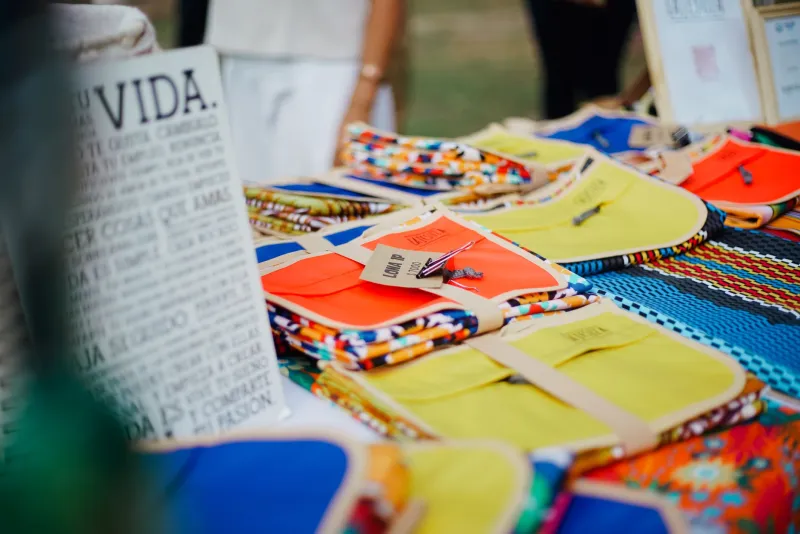
A jar of hot honey from a small-batch producer at a farmers market in Asheville. A secondhand paperback from a used bookstore in New Orleans with someone else's margin notes still inside. A piece of fabric bought directly from a weaver at a market in Oaxaca. A single smooth stone you picked up on a beach in Iceland because the light hit it in a way you couldn't photograph.
None of these are expensive. All of them carry actual weight — not just in your bag, but in your memory.
The psychologists call it the "endowment effect" — we value things more when we have a personal connection to acquiring them. When you hunted something down, negotiated for it in broken Spanish, or stumbled across it on a side street you weren't supposed to be on, that object becomes a portal. It takes you back.
The Intangible Souvenir
Some of the best things you can bring home don't fit in your luggage at all.
A recipe you learned by watching someone cook. A phrase in a language you don't speak that made a stranger laugh. A habit you picked up — drinking your coffee standing at a bar, walking instead of riding, eating lunch at 2pm. A shift in perspective that quietly rearranged something inside you.
These are souvenirs too. And in a lot of ways, they're the most durable kind.
Marco Polo — the actual one, not just the name on this website — didn't come back from his travels with a bag full of tchotchkes. He came back with knowledge, stories, and a way of seeing the world that had been permanently expanded. The Travels he eventually dictated wasn't a shopping list. It was a record of what he'd absorbed.
That's the model worth aspiring to, even if you're just doing a long weekend in New Mexico instead of a decade in Central Asia.
A Framework for Buying With Intention
Before you reach for your wallet in a tourist market, try running whatever you're holding through a quick mental checklist:
Could I buy this anywhere? If the answer is yes — if you've seen the same thing at three other stalls, or if it's clearly mass-produced — put it down. You're not buying a piece of the place; you're buying a symbol of it, and symbols get old fast.
Does this have a maker? Local artisans, small producers, family-run shops — these are the places worth spending your money. When you can point to the person who made something, the object carries that human story with it.
Will I actually use it, wear it, or display it? Brutal question, but necessary. That hand-painted bowl is beautiful in the market. Is it beautiful in your apartment? Will it sit on a shelf you actually look at, or end up in that drawer?
Does it remind me of a specific moment, not just a general place? The best keepsakes are time-stamped. They pull you back to a particular afternoon, a specific conversation, a feeling that was yours alone.
The Case for Buying Less and Choosing Better
There's a version of travel shopping that feels like consumption for its own sake — filling a bag because you feel like you should be bringing things home. And then there's a version that feels more like curation. You're not collecting stuff. You're editing your life with objects that have earned their place in it.
One well-chosen thing beats a bag full of forgettable ones every single time. A single piece of pottery you carried home wrapped in your favorite flannel shirt, that now sits on your kitchen shelf and makes you think about a market in Taos every time you reach past it — that's worth more than a dozen magnets.
The goal isn't minimalism for its own sake. It's intentionality. It's asking yourself what this place actually gave you, and whether the thing in your hand is really a reflection of that.
What Deserves a Place in Your Life
Travel changes you — sometimes dramatically, sometimes in ways so subtle you don't notice until months later when you catch yourself thinking differently about something. The objects you bring home are, in a small way, an extension of that change. They're physical reminders that you were somewhere, that you paid attention, that you let a place get under your skin a little.
Choose accordingly. Leave the keychain on the rack. Find the thing that actually tells the story.
Because the best souvenir isn't proof that you were there. It's proof that you were present.