When the World Goes Quiet: A Traveler's Guide to Places That Actually Make You Stop
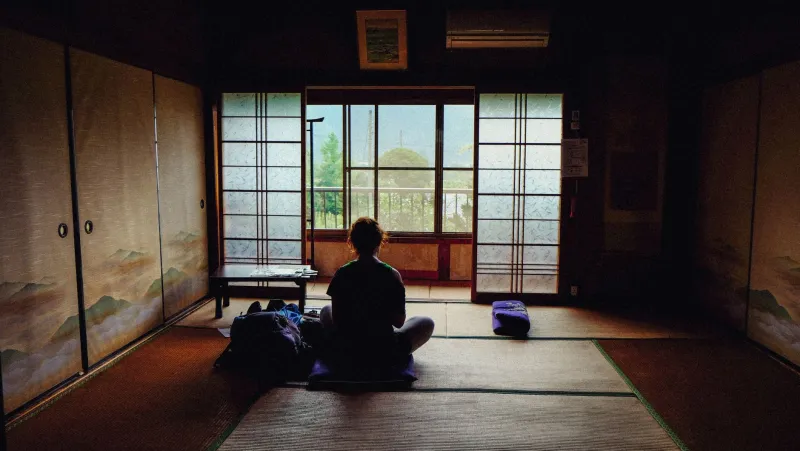
Let's be honest: most of us travel loud. We arrive with playlists, podcasts, group chats pinging at altitude, and a mental checklist of photos we need to get before sunset. We document, we share, we move on. And there's nothing wrong with any of that — until you've experienced the alternative.
Because somewhere along the way, a growing number of travelers started asking a different question. Not where should I go? but where can I actually hear myself think?
The answer, it turns out, is everywhere — if you know what you're looking for.
The Noise We Don't Notice We're Carrying
Before you can appreciate genuine silence, you have to reckon with just how saturated your baseline actually is. The average American adult spends nearly eleven hours a day consuming media in some form. Add in urban ambient noise, open-plan offices, and the low-grade hum of constant connectivity, and what you're left with is a nervous system that's basically forgotten what stillness feels like.
Travel doesn't automatically fix this. In fact, it often amplifies it. Airports are sensory assault courses. Popular destinations are crowded and loud. Even the "wellness travel" industry — with its branded retreats and curated detox packages — can sometimes feel like noise dressed up in linen.
What we're talking about here is something different. Something older.
What Real Silence Does to You
Ask anyone who has sat for an hour in a Zen garden in Kyoto, or stood alone on the edge of Iceland's Landmannalaugar highlands with nothing but wind and the smell of sulfur, and they'll tell you the same thing: something shifts.
It's not dramatic. There's no lightning bolt. But somewhere around the twenty-minute mark — after the mental chatter starts to thin out — you begin to notice things you'd completely stopped noticing. The way light moves. The temperature of air on your skin. The fact that your shoulders have been up around your ears for six months.
Researchers at Stanford have found that even short periods of nature-based quiet can reduce activity in the part of the brain associated with rumination — that endless loop of anxious self-narration most of us mistake for thinking. Silence, it turns out, isn't empty. It's just a different kind of full.
Japan: The Architecture of Intentional Quiet
Few cultures have thought as carefully about silence as Japan. The concept of ma — a word that roughly translates to "negative space" or "meaningful pause" — is woven into Japanese art, architecture, and daily life. It's the gap between notes in music. The emptiness in a room that makes the furniture matter.
You feel ma most acutely in places like Ryoan-ji in Kyoto, a fifteenth-century Zen temple whose famous rock garden is one of the most deliberately quiet human constructions on the planet. There are no explanations posted. No audio guides. Just fifteen stones arranged in raked gravel, and a wooden veranda where you sit and look until something in you settles.
For travelers willing to go deeper, the mountain monastery town of Koya-san offers overnight stays in temple lodgings where you wake before dawn to attend morning prayer, walk among ancient cedar trees, and eat shojin ryori — the austere, surprisingly beautiful vegetarian cuisine of Buddhist monks. It is, without question, one of the most quietly transformative experiences available to any traveler anywhere in the world.
Iceland: Silence at the Edge of the Earth
Iceland is a place that earns its reputation. The interior highlands — accessible only in summer, largely untouristed compared to the Ring Road circuit — offer a kind of silence that feels geological. You're not just away from people; you're in a landscape so elemental it makes the concept of "away" feel inadequate.
The Kjölur route, a gravel track cutting through the heart of the island between two glaciers, sees a fraction of the traffic that Iceland's more famous sites attract. You can spend hours without seeing another vehicle. The terrain shifts from black lava fields to green moss plains to steaming geothermal vents, and through all of it runs an almost uncomfortable stillness that forces a kind of presence most of us spend our whole lives avoiding.
This is not wellness tourism. Nobody is handing you a smoothie or guiding you through breathwork. It's just you, the wind, and a landscape that predates human anxiety by about ten million years.
Closer to Home: American Silence Worth Seeking
You don't need a long-haul flight to find this. The United States holds some of the most genuinely silent places on Earth — we've just built a culture that's remarkably good at ignoring them.
The Boundary Waters Canoe Area Wilderness in northern Minnesota is federally designated as one of the quietest places in the country. No motors. No roads. Just a million acres of interconnected lakes and forest where your paddle strokes are the loudest sound for miles. People who go for a week often describe it as the reset they didn't know they needed.
New Mexico's Chaco Canyon — a remote UNESCO World Heritage Site that served as the ceremonial center of ancient Pueblo civilization — draws relatively few visitors despite its extraordinary significance. The silence there has a specific quality: layered, old, and somehow expectant. It asks something of you.
Even closer to urban centers, Quaker meeting houses — found in cities from Philadelphia to San Francisco — hold open silent worship services that welcome anyone, regardless of religious background. An hour of shared, intentional silence in community is a surprisingly profound experience, and it costs exactly nothing.
How to Actually Receive It
Here's the thing about silence: you can't just show up and immediately access it. The mind doesn't cooperate like that. Most people spend the first twenty minutes of genuine quiet feeling vaguely irritated, then bored, then anxious, then — if they stay — something else entirely.
A few things help. Leave your earbuds out, not just in your pocket. Give yourself permission to have no agenda for a defined window of time — even ninety minutes. Resist the urge to photograph the silence (you can't anyway). And maybe most importantly: go alone, or with someone who understands that conversation can wait.
The travelers who come back from these places changed aren't the ones who found the most impressive view. They're the ones who stayed long enough for the quiet to do its work.
Marco Polo didn't travel with noise-canceling headphones. But we'd like to think he understood something about this — about how the deepest discoveries don't announce themselves. They wait, patiently, in the spaces between everything else.
You just have to get quiet enough to find them.