Trust Your Gut, Not Your Fear: The Solo Traveler's Guide to Smart Risk-Taking
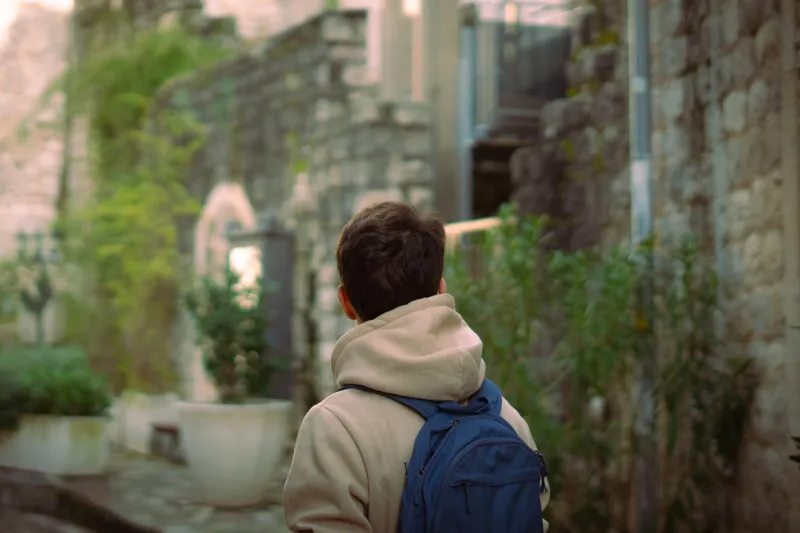
There's a moment every solo traveler knows. You're standing somewhere unfamiliar — a side street in Oaxaca, a train platform in rural Portugal, a night market in Chiang Mai — and someone you've never met is waving you over, gesturing toward something you can't quite make out, grinning like they know something you don't. Every instinct fires at once. Some say go. Some say run. And you have about four seconds to figure out which voice to listen to.
That split-second negotiation between curiosity and caution is, in many ways, the whole game of solo travel. Get it right consistently, and you end up with the stories people lean in to hear. Get it wrong — or worse, let fear make every call — and you spend a lot of money to sit in a hotel room scrolling your phone.
This isn't a guide about staying safe by staying small. It's about developing the kind of judgment that lets you say yes to the right things — and no to the wrong ones — without losing your mind in the process.
Fear Is Data, Not a Decision
First, let's reframe something. Fear isn't your enemy on the road. It's information. The problem is that most of us were never taught to interpret it accurately. We treat every flutter of anxiety as a stop sign, when in reality, a lot of what we feel as "fear" in new environments is just novelty. Unfamiliarity. The simple discomfort of not knowing how something works yet.
Experienced solo travelers — the ones who've been doing this for years across dozens of countries — will tell you the same thing: real danger usually has a specific texture. It's quieter. More focused. It's the guy who's too helpful, too insistent, who appeared a little too conveniently. It's the alley that looks fine on paper but feels wrong in a way you can't explain. That's your nervous system doing its actual job.
The background hum of general anxiety — the "what if something goes wrong" noise that shows up before you even leave your Airbnb? That's just your brain adjusting to a new operating environment. Acknowledge it. Don't let it drive.
Build Your Baseline Before You Test It
One of the quietest secrets of seasoned solo travelers is that they don't arrive somewhere and immediately throw themselves into the deep end. They build a baseline first.
Spend the first day or two just watching. Sit in a café. Walk the main drag. Observe how locals move, how they interact with strangers, what the social rhythms feel like. You're essentially calibrating your internal compass to a new place. Once you know what "normal" looks like here, anything that deviates from it becomes much easier to notice.
This isn't paranoia — it's pattern recognition. The same skill a good journalist uses when they walk into a new situation. You're not looking for danger; you're just learning the landscape so you can read it accurately when it matters.
The Stranger Invitation Problem
Let's talk about the most loaded scenario in solo travel: someone you just met invites you somewhere.
Maybe it's a local family asking if you want to join them for dinner. Maybe it's a fellow backpacker suggesting a hike to a waterfall that's "not on any map." Maybe it's a shopkeeper offering to show you a neighborhood that tourists never see. These moments are genuinely where the best travel memories are made — and also where bad judgment can get you into real trouble.
So how do you tell the difference?
A few things to consider: Does the invitation feel pressured or open? Genuine hospitality tends to leave you a way out. There's no urgency, no "you have to come now." Does the person have something to lose? Someone with a business, a family nearby, a reputation in the community has skin in the game. Does the situation make logistical sense? A dinner invitation that involves getting into an unmarked car and traveling an hour away is a different animal than walking two blocks to someone's home.
And here's the one that sounds almost too simple: tell someone where you're going. Text a friend, drop a pin, leave a note at your hotel. This single habit removes an enormous amount of risk from almost any situation, because if something goes sideways, someone knows where to start looking. It also has a funny psychological effect — once you've told someone, you tend to feel calmer about going, because you've already done the responsible thing.
When to Fold
Knowing when to bail is just as important as knowing when to jump in. And the travelers who do this well have usually made peace with the fact that leaving a situation isn't failure — it's information-processing.
If something shifts mid-experience and your comfort level drops, you're allowed to leave. You don't owe anyone an explanation. A simple "I need to get going" is complete. You don't have to justify it, apologize for it, or talk yourself out of it. Solo travel gives you a kind of freedom that group travel doesn't — you answer to yourself, and that includes the freedom to exit.
The travelers who get into trouble are often the ones who override their own signals because they don't want to seem rude, or paranoid, or like they're not "adventurous enough." Your comfort level is not a personality flaw. It's a compass.
Intuition Is a Skill, Not a Gift
Here's the thing about gut feelings that most people miss: they're not mystical. They're the product of accumulated experience, pattern recognition, and thousands of micro-observations your conscious mind never had time to process. The more you travel solo, the more data your intuition has to work with.
Which means it gets better. The first time you travel alone, everything feels equally risky because nothing has a reference point. By the fifth or tenth trip, you've got a working library. You've seen how a sketchy situation tends to develop. You've felt the difference between a neighborhood that's rough-around-the-edges-but-fine and one that's actually hostile. You've learned which red flags are real and which ones are just unfamiliarity in disguise.
You build this library by going. By saying yes to enough things that you develop a feel for the texture of different situations. And by occasionally getting it slightly wrong — not catastrophically, but enough to recalibrate.
The Real Point
Solo travel at its best is a sustained exercise in trusting yourself. Not blindly — not in the "close your eyes and leap" way that makes for dramatic Instagram captions. But in the slow, practiced, deliberate way that comes from showing up, paying attention, and making judgment calls with the information you actually have.
The goal isn't a life without risk. It's a life where you've gotten good enough at reading risk that it stops being the thing that makes the decisions for you.
Say yes more than you say no. Learn the difference between your fear and your instincts. Tell someone where you're going. And when something genuinely doesn't feel right — trust that too.
Marco Polo didn't have a safety app. He had experience, observation, and the willingness to keep moving. You're working with better tools. Use them.