Skip the Postcard: What You Find When You Stop Chasing the World's Most Famous Places
The List That's Not Really Yours
Somewhere along the way, travel got turned into a checklist. Not your checklist — the checklist. The Colosseum. Machu Picchu. The Taj Mahal. Angkor Wat. These places exist in a kind of cultural shorthand, a shared vocabulary of "serious traveler" status that gets reinforced every time someone posts a sunrise selfie from a UNESCO site and racks up five hundred likes before noon.
And look — nobody's saying those places aren't worth seeing. They earned their reputations for real reasons. But here's the question nobody asks loudly enough: Did you actually want to go there, or did you go because you thought you were supposed to?
There's a difference. And learning to tell the two apart might be the most honest thing you can do for your own travel life.
The Crowding Problem Nobody Talks About Honestly
Let's start with the practical reality. Venice is sinking — partly from water, partly from the sheer weight of tourism infrastructure that now dominates what was once a living, breathing city. Santorini's famous caldera villages are so packed during peak season that locals have essentially been priced and pushed out of their own neighborhoods. The trail to Everest Base Camp has a litter problem that would make a landfill blush.
This isn't anti-travel cynicism. It's just honesty. When millions of people funnel toward the same handful of destinations year after year, the experience degrades — not just for the place, but for the traveler. You're not discovering anything. You're queuing. You're fighting for a clean sightline. You're paying a premium for the privilege of feeling vaguely disappointed that the real thing doesn't look quite like it did in that magazine spread from 2009.
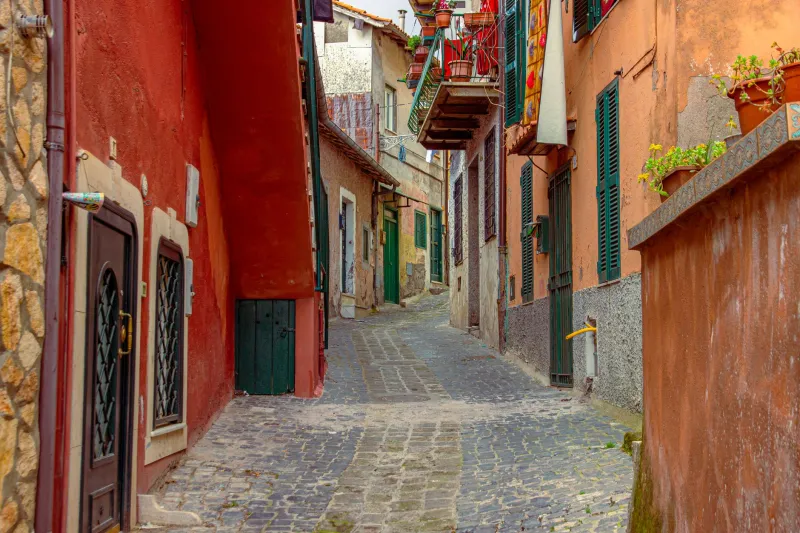
Meanwhile, there are towns in southern Portugal, mountain villages in rural Japan, fishing communities along the Gulf Coast of Mexico, and entire regions of the American South and Appalachia that are genuinely hungry for curious visitors — places where your presence adds something instead of just adding to the congestion.
What "No" Actually Unlocks
Here's where it gets interesting. When you take the famous destination off the table, something unexpected happens: you're forced to get creative.
You start asking better questions. Not "Where should I go?" but "What do I actually want to feel?" Do you want to eat food that surprises you? Do you want to walk streets where you're one of the only tourists? Do you want to have a real conversation with someone whose daily life looks nothing like yours? Those questions lead somewhere entirely different than the standard itinerary.
A few years back, a traveler I know skipped Rome on a trip to Italy — skipped it entirely — and spent two weeks instead in Basilicata, a region in the deep south that most Americans couldn't place on a map. She ate in restaurants where the menu came out of the kitchen verbally, in Italian, with no translation offered. She stayed in a sassi — one of the ancient cave dwellings in Matera, a city so old it's thought to be one of the first human settlements in Italy. She was, on most days, the only obvious outsider in the room.
She still talks about it as the best trip she's ever taken. Not because Basilicata is objectively better than Rome, but because it was hers. She found it. Nobody handed it to her.
The Economics of Going Off-Script
There's also an argument here that goes beyond personal satisfaction. When you travel to places that don't yet have the infrastructure of mass tourism, your money does something different. It goes to a family-run guesthouse instead of an international hotel chain. It goes to a local guide who isn't running the same tour for the fourteenth time that week. It goes to a restaurant that actually needs your business rather than one that's booked solid through the next tourist season regardless of whether you show up.
In the US, this plays out in ways that feel immediately tangible. Small towns across the rural Midwest, the Mississippi Delta, the high desert of New Mexico — these places have real culture, real food, real history that most travelers drive past on the way to somewhere more famous. The kind of authentic, community-rooted experience that travelers claim to be searching for? It's often sitting right there, unvisited, in a town of four thousand people that doesn't have a single TripAdvisor ad budget.
Choosing those places isn't charity. It's just smarter travel.
Building a Reverse Bucket List
So what does it actually look like to build a travel life around saying no to the obvious?
Start by making a list — not of places you want to go, but of experiences you want to have. Genuine ones, not Instagram-optimized ones. Then work backward. Where in the world, or even in your own country, can you actually have that experience without fighting a crowd for it?
Let go of the idea that a trip only counts if other people have heard of where you went. The best travel stories — the ones people actually want to hear at dinner — are almost never the ones that start with "So we did the standard tour of..." They start with "You've probably never heard of this place, but..."
That's the sentence worth chasing.
You don't have to boycott the Louvre or swear off Yellowstone forever. But consider what happens when you make the famous places the exception rather than the default. Consider what opens up when you give yourself permission to be genuinely curious instead of just compliant with a list someone else wrote.
The Marco Polo Principle
Marco Polo didn't travel to the places everyone already knew. He went toward the unknown, toward the edges of the map where the information got thin and the discoveries got real. That spirit — the willingness to move toward uncertainty instead of away from it — is what separates a traveler from a tourist.
You don't have to cross continents to find it. You just have to be willing to skip the postcard.
The door nobody's knocking on is usually the one worth opening.