What If the Best Thing You Brought Home Was Something You Gave Away?
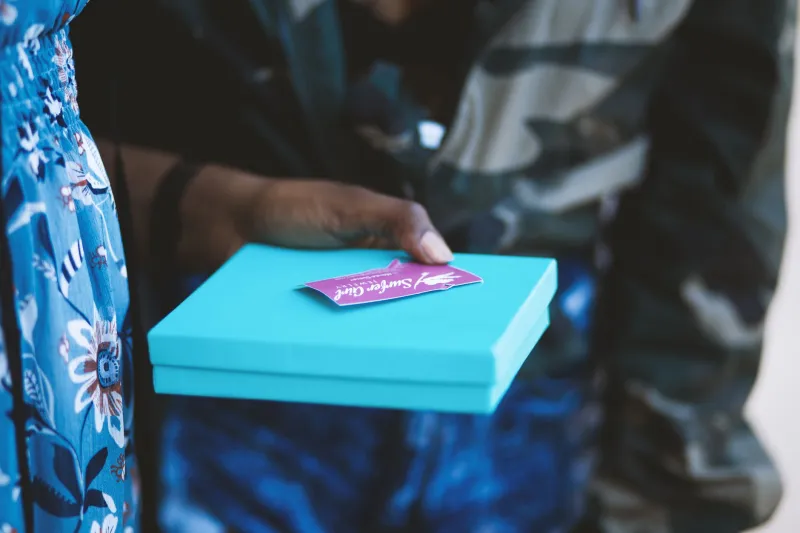
At some point, most of us accumulate a shelf — or a drawer, or a box in the back of the closet — full of the physical evidence of places we've been. A ceramic tile from Lisbon. A woven bracelet from a market in Oaxaca. A snow globe that made perfect sense in the shop and slightly less sense every year after. The souvenir shelf is a deeply human impulse: we want to hold onto places, to carry a piece of them back into our ordinary lives, to have something to point to and say, I was there.
But here's a question worth sitting with: what if the most meaningful thing you took from a journey wasn't an object you picked up, but a connection you made by leaving something behind?
The Cultural Baggage of the Keepsake
The word "souvenir" comes from the French for "to remember," and the practice of bringing home tangible memories from travel is as old as travel itself. Roman tourists scratched their names into Egyptian monuments. Medieval pilgrims carried home holy relics. American tourists in the 20th century filled suitcases with painted plates and embroidered tablecloths.
There's nothing inherently wrong with any of this. Objects can carry genuine meaning. A piece of fabric bought directly from the artisan who wove it, at a fair price, with a real conversation attached to the transaction — that's a legitimate form of cultural exchange. The object becomes a conduit for a relationship.
But a lot of souvenir culture has drifted pretty far from that. The mass-produced keychain manufactured in a factory three countries away from the destination printed on it. The refrigerator magnet grabbed at the airport out of obligation. The T-shirt that will be worn twice and donated within the year. These objects don't carry much. They're placeholders for an experience that deserves better representation.
And increasingly, travelers are asking whether the entire framework — bring something home, prove you were there — might be worth rethinking.
The Art of Leaving Something Behind
What does it look like to travel in the other direction? To arrive somewhere with the intention of leaving something meaningful rather than taking something away?
It doesn't have to be grand. It rarely is. A traveler named Diana, a middle school art teacher from Minneapolis, started bringing a small sketchbook on every trip — not to keep, but to fill and leave behind. She'd spend a few days drawing the neighborhood she was staying in, then leave the sketchbook with her host, or the owner of the guesthouse, or the person at the corner bakery who'd been patient with her terrible attempts at the local language.
"The first time I did it, I thought it was going to be awkward," she said. "Like, who wants a stranger's drawings? But the reaction was — it was something I wasn't prepared for. The woman I gave it to started crying. Not because the drawings were good. Just because someone had looked at her neighborhood that carefully and wanted her to have it."
That exchange — the act of handing someone a record of how you saw their world — is a different kind of transaction than buying a souvenir. It's not a consumer relationship. It's a human one.
What Gets Created in the Exchange
There's a reciprocity built into the act of intentional leaving that the standard souvenir purchase rarely achieves. When you give something away in a place, you create a story that belongs to both of you. The person who receives it has a reason to remember you. You have a reason to remember them. The object — or the gesture, or the act — becomes a shared artifact rather than a private one.
This matters because one of the things travel does, at its best, is dissolve the boundary between visitor and visited. The souvenir, in its traditional form, reinforces that boundary. You come, you consume, you leave with proof of consumption. The exchange is one-directional.
But when you leave something behind — a book you loved, a piece of clothing that someone admired, a photograph you printed specifically to give to someone you met — the exchange flows both ways. You're not extracting. You're participating.
Some travelers take this further. There are people who travel with deliberate intention to donate to local organizations — not with cash wired from home, but in person, with time and presence attached. Others bring supplies that are genuinely needed in specific communities, coordinated in advance. These practices have their own complexities and require real care to do well, but the underlying impulse is the same: to be a presence in a place rather than a passing consumer of it.
The Lightness of Traveling Empty
There's also a purely practical dimension to this that shouldn't be underestimated. Souvenirs are heavy. Not just emotionally — literally. Anyone who has ever tried to get a fragile ceramic piece through airport security, or paid overweight baggage fees on a suitcase stuffed with market finds, knows the particular low-grade misery of being burdened by your own purchases.
Traveling with the intention to leave things rather than acquire them changes your relationship to your luggage in a surprisingly liberating way. You pack what you need. You bring things you're prepared to part with. You move through places lighter, less encumbered, less focused on the logistics of getting things home.
And what you carry home instead — the memory of a specific exchange, the face of someone who received something unexpected, the feeling of having been genuinely generous in a place — packs down to nothing and weighs absolutely zero.
Rethinking What "Taking Something Home" Means
None of this is an argument against ever buying anything when you travel. Supporting local artisans, purchasing directly from makers, investing in objects that carry real craft and cultural meaning — all of that matters. The economy of travel is real, and thoughtful consumption is part of responsible tourism.
But the deeper point is about what you're actually trying to hold onto when you reach for that souvenir. If the answer is "the feeling of being in that place" or "the connection I made with that person" — then the object is probably not the best vessel for it. Feelings and connections don't live in things. They live in the stories you tell, the details you remember, the ways a place quietly rearranges something in you that you don't even notice until you're back home.
The sketchbook Diana left behind in a guesthouse in Porto? She has no physical record of it. But she can describe every drawing in it from memory, and she can describe the woman's face when she received it with a precision that no photograph could match.
That's what she took home. And it hasn't faded yet.