Go Somewhere You Don't Want to Go: The Unexpected Power of the Reluctant Journey
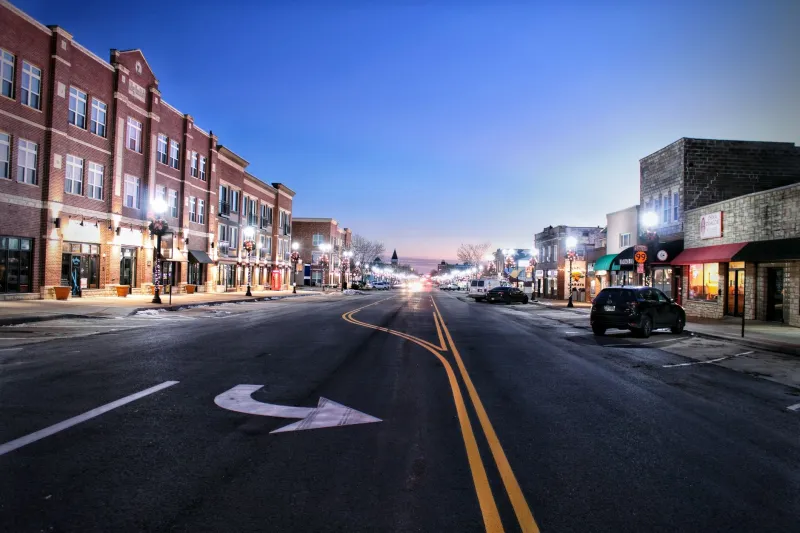
Let's be honest. There are places on this planet that simply do not make the highlight reel. No one is pinning photos of them to their dream boards. No influencer is breathlessly captioning a sunrise shot from their downtown. These are the cities that exist primarily as layover inconveniences, the towns that get half a paragraph in the guidebook before the author pivots to somewhere more photogenic, the destinations that make people say, "Why would you go there?"
And yet. Some of the most quietly profound travel experiences in living memory have happened in exactly those places.
There's a particular kind of traveler — curious, a little stubborn, maybe a bit tired of fighting for elbow room at the popular overlooks — who has started deliberately choosing destinations that don't excite them on paper. Not as punishment. Not as some kind of ascetic exercise in denying themselves beauty. But because they've noticed something: the places you arrive at with low expectations have an almost unfair advantage. They can only surprise you.
The Tyranny of the Must-See List
The bucket list is, at its core, a document of other people's enthusiasm applied to your life. Someone decided that a particular canyon, a specific coastal village, a famous market deserved to be on every traveler's radar — and through the miracle of social media amplification, that consensus calcified into obligation. Now millions of people are queueing up for the same photograph, feeling vaguely guilty if they're not moved to tears by it.
That's a strange way to explore the world.
When you arrive somewhere famous, you're not really arriving fresh. You're arriving loaded — with images you've already seen, stories you've already read, expectations assembled from a thousand other people's accounts. The destination has to fight through all of that just to reach you. Sometimes it wins. Often, honestly, it doesn't quite.
But when you pull into a mid-sized Rust Belt city on a gray Tuesday in November, or step off a bus in a provincial town in the middle of flyover country that nobody put on any list — you're actually there. No filter. No preview reel. Just the place, and you, figuring each other out.
What Reluctance Teaches You
Travelers who've experimented with this approach tend to describe a similar arc. First, mild dread. Then boredom, or something that feels like it. Then — usually around day two or three — a crack in the surface.
A hardware store owner in Youngstown, Ohio, who turns out to have spent fifteen years restoring a 19th-century theater on weekends, mostly because no one told him it couldn't be done. A diner in Gary, Indiana, where the pie is genuinely the best you've ever eaten and the woman who made it has absolutely no interest in opening a second location. A stretch of coastline in a county that doesn't have a tourism board, where the tide comes in and there's nobody around to tell you how to feel about it.
The reluctant destination strips away the performance of travel. You're not there to check something off. You're not chasing a photograph you've already seen. You're just... present. And presence, it turns out, is where the interesting stuff lives.
The Gift of Being Genuinely Surprised
There's a traveler named Marcus — a high school history teacher from Portland who spent three summers deliberately visiting American cities that consistently ranked at the bottom of "most desirable" lists. Akron. Stockton. Camden. He wasn't doing it ironically, and he wasn't doing it to make a point. He was doing it because he'd gotten bored with the predictability of his own taste.
"I kept going to places that were supposed to be great," he said, "and they were great, but I already knew they were going to be great. There was no room for anything to catch me off guard."
What he found in those underdog cities wasn't a hidden paradise. He found complicated, layered, fully human places doing the difficult work of being themselves without any help from the tourism industry. He found people who were proud of their towns in a way that wasn't performative, because there was nothing to perform for. He found histories that hadn't been polished into a marketable narrative yet.
He also found, somewhat to his embarrassment, that he'd been a snob. Not a cruel one. Just a traveler who'd let other people's enthusiasm quietly override his own curiosity.
How to Actually Do This
The reluctant journey doesn't require suffering. It requires a willingness to let go of the idea that a destination needs to earn your presence before you arrive.
Start small. On your next trip — domestic or international — build in a day or two in a place that doesn't appear in any "top ten" roundup. Not the scenic detour everyone recommends. The actual unremarkable town between two more interesting stops. Give it genuine time. Eat where the locals eat, not where the one TripAdvisor review tells you to go. Walk without a destination.
Pay attention to what boredom does to your perception. Boredom, in a new place, is often just the precursor to noticing. When there's nothing obvious to look at, you start looking at everything else.
And resist the urge to frame it as a story before you've finished living it. The reluctant journey has a way of meaning something different in retrospect than it did in the moment — but only if you let it unfold on its own terms.
The Places That Don't Need You
There's something quietly radical about visiting a place that has absolutely no stake in impressing you. The famous destinations need tourists. They've built entire economies around the transaction. But the overlooked town? It was fine before you got there. It'll be fine after you leave. You're not a customer. You're just a person who showed up.
That dynamic changes everything about how you move through a place. You can't consume it. You can only participate in it, on its terms, at whatever pace it runs.
And in that participation — reluctant, unscripted, entirely yours — you might find that the most honest travel you've ever done was the trip you almost didn't take to the place you almost didn't go.