The Most Meaningful Border You'll Ever Cross Is Someone's Front Door
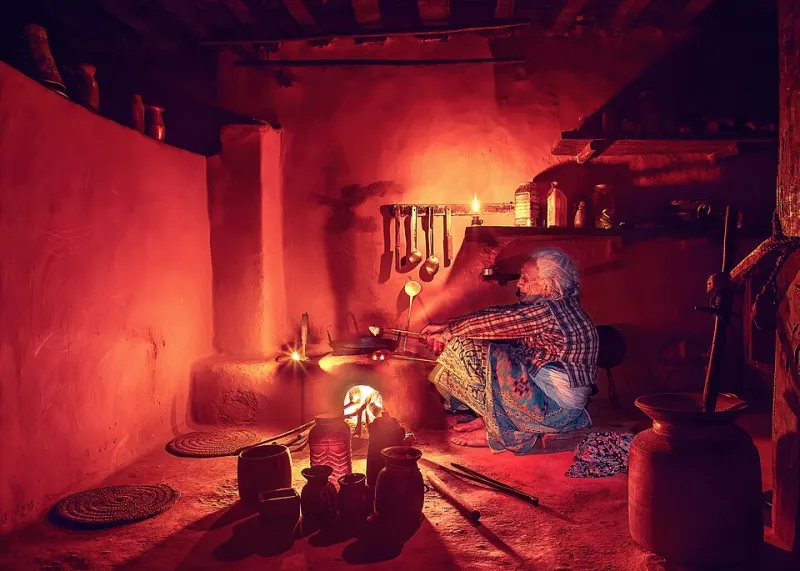
Photo: Original: Mithun Kunwar Derivative work: Radomianin, CC BY-SA 4.0, via Wikimedia Commons
Forget the bucket list for a moment.
Not the whole thing — just long enough to consider a different kind of travel experience. One that doesn't involve a famous skyline, a UNESCO plaque, or a reservation made six months in advance. One that involves an apron, a cutting board, and someone's grandmother explaining, in a language you don't fully speak, exactly why you've been chopping the onion wrong your entire life.
Culinary homestays — travel experiences built around cooking with and learning from local families in their actual homes — are having a quiet, significant moment. And for good reason. In a world where "authentic experience" has become one of the most overused phrases in travel marketing, these programs offer something genuinely hard to manufacture: access.
What a Culinary Homestay Actually Is
The term covers a range of experiences, but the core idea is consistent. You're not going to a cooking school with a professional chef in a purpose-built kitchen. You're going to someone's home. You're shopping with them at the local market. You're learning a recipe that's been in their family for three generations and has never appeared in a cookbook. You're eating dinner at their table.
Some of these experiences are highly structured, offered through established programs with application processes and set curricula. Others are informal — arranged through local contacts, guesthouses, or platforms like EatWith and Traveling Spoon, which connect travelers directly with home cooks around the world.
The common thread is intimacy. And intimacy, it turns out, is a remarkably effective teacher.
A Kitchen in Oaxaca
Oaxaca, Mexico has long been considered one of the world's great food destinations — a region where mole negro takes days to make and the market stalls at Mercado Benito Juárez feel like an education in themselves. But the most transformative food experiences in Oaxaca often happen nowhere near the markets.
Programs like Seasons of My Heart, founded by cookbook author Susana Trilling, have been bringing small groups of travelers into working Oaxacan kitchens for decades. Participants don't just learn to cook — they learn to think about food the way Oaxacans do: as heritage, as ceremony, as an act of resistance against cultural erasure.
Americans who've done these programs often describe a version of the same moment: standing over a metate, grinding dried chilies by hand, realizing that what they're doing isn't a cooking lesson. It's a conversation across centuries.
"I kept thinking I was there to learn a recipe," said Dana, a food writer from Portland who spent a week with a family in the Central Valleys region. "But what I was actually learning was how a family thinks about time, and loss, and what they want to pass on. The food was just the language we were using."
Farmhouse Tables in Rural Japan
Japan presents a different kind of culinary homestay experience — one filtered through the country's particular relationship with precision, hospitality, and the philosophy of ichiju sansai (one soup, three sides).
In rural prefectures like Yamagata and Shimane, programs built around satoyama (rural village) culture invite travelers to stay with farming families, participate in seasonal harvests, and learn the quiet art of Japanese home cooking — not the sushi and ramen that dominate Western imagination, but the daily, unglamorous, deeply satisfying food that sustains actual Japanese households.
Organizations like WWOOF Japan and the Rural Tourism Japan network facilitate many of these stays, though the experiences vary widely. What they share is an almost enforced slowness. You're on a farm schedule. You eat what was grown nearby. You learn that Japanese home cooking is, at its heart, about restraint and attention — two things that translate surprisingly well across cultures.
For American travelers accustomed to abundance and variety, this is often the disorienting part. A meal of rice, pickled vegetables, miso soup, and one piece of grilled fish isn't a disappointing dinner. It's an argument about what enough means.
The Stone Houses of Southern Italy
Southern Italy — Calabria, Basilicata, the interior of Sicily — doesn't get the tourist traffic of Tuscany or the Amalfi Coast, which means the culinary homestay experiences there feel less curated and more genuinely lived-in.
Platforms like Agriturismo Italia list hundreds of working farms and family homes that offer cooking experiences, but some of the most memorable are arranged informally through local tourism offices or simply by showing up in a village and asking the right questions. Italian hospitality being what it is, the questions rarely go unanswered.
What these kitchens teach — beyond specific recipes for pasta alla Norma or 'nduja-laced ragù — is something harder to quantify. Southern Italian home cooking is inseparable from its social context. Food is made in large quantities because family is assumed. Recipes are approximate because the cook's judgment is trusted. The kitchen is loud and communal and slightly chaotic in a way that feels like the opposite of performance.
For Americans who've spent years following precise measurements in spotless kitchens, this is revelatory. Cooking, it turns out, can be an act of trust.
Why This Kind of Travel Hits Differently
There's a reason culinary homestays tend to produce the stories travelers tell longest after they've come home. Food is uniquely positioned to dissolve the distance between people. You can appreciate a cathedral without understanding the faith that built it. You can admire a landscape without knowing the history beneath it. But you cannot sit at someone's table, eat their food, and remain entirely a stranger.
That's the mechanism at work here. Not the recipes — though those matter — but the shared vulnerability of a meal. Someone cooked this for you. They used their hands. They made decisions about what you needed. That transaction is ancient and intimate in a way that no guided tour can replicate.
How to Find These Experiences
For US travelers interested in culinary homestays, a few starting points:
- Traveling Spoon (travelingspoon.com) connects travelers with vetted home cooks in over 60 countries and is specifically designed around the homestay model.
- EatWith offers a similar marketplace, with options ranging from casual home dinners to multi-day cooking experiences.
- Workaway and HelpX sometimes include farm-based food experiences in exchange for a few hours of daily help — a good option for longer stays on tighter budgets.
- Local tourism boards in regions like Oaxaca, Sicily, and rural Japan often maintain lists of family-run agritourism and cooking programs that don't appear on major booking platforms.
The best experiences, though, are often the ones you don't fully plan. The neighbor who invites you in. The market vendor who offers to show you what to do with the ingredient you've been staring at. The front door that opens because you knocked.
That's the border worth crossing.