Ditch the GPS: What Happens When You Actually Let Yourself Wander
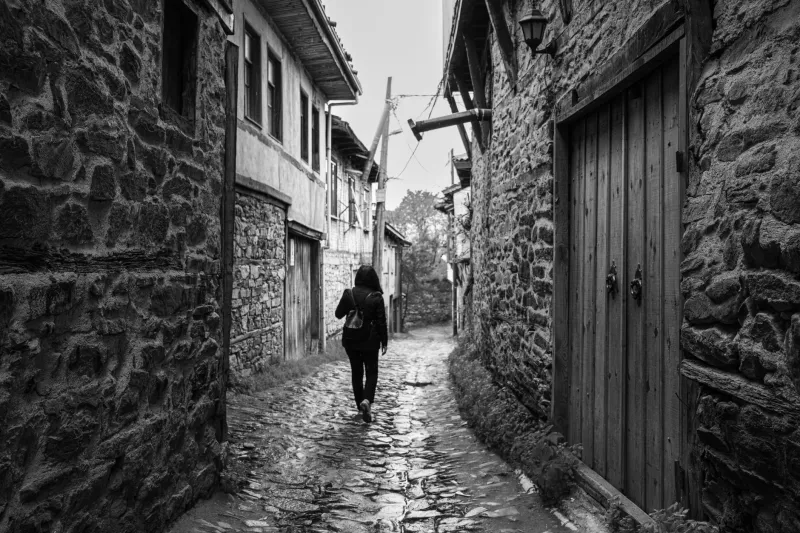
Somewhere between the third wrong turn and the moment a stranger hands you a piece of bread you've never heard of, something shifts. The anxiety that comes with being off-route quietly dissolves, and in its place you find something rarer: genuine surprise. Real travel—the kind that stays with you long after the jet lag fades—tends to happen in exactly those unscripted moments.
We've become so good at optimizing our trips that we've accidentally engineered the wonder right out of them. Every corner pre-Googled. Every restaurant pre-vetted. Every "hidden gem" already hashtagged by 40,000 people before you arrive. The map doesn't just guide us anymore—it controls us.
What if we put it down?
The Case for Deliberate Disorientation
Getting lost on purpose sounds like a contradiction. But experienced wanderers will tell you it's actually a skill—one that takes a little practice and a willingness to feel mildly uncomfortable for the sake of something extraordinary.
Travel psychologists have long noted that novelty and mild uncertainty are among the strongest triggers for what researchers call "autobiographical memory consolidation"—basically, the reason why the weird, unplanned moments tend to be the ones we actually remember. Your brain is wired to log the unexpected. That perfectly Instagrammed rooftop dinner? It's already blending into the archive. The alley you stumbled into, the accordion player, the family that waved you in for coffee—that's the stuff that sticks.
Rachel, a teacher from Portland, Oregon, described wandering off-map in Lisbon as the turning point of her entire trip. "I had this whole schedule—museums, viewpoints, the whole checklist. Then I got turned around in Mouraria and ended up at this tiny fado bar that wasn't in any guidebook. The owner didn't speak English. I didn't speak Portuguese. But we sat there for two hours just listening to music and pointing at things on the menu." She paused. "That's the part I've told every single person about."
What You're Actually Giving Up (And What You're Getting Back)
Let's be honest about the tradeoff. Abandoning your itinerary means you might miss the thing you planned to see. You could end up in a neighborhood that's more residential than picturesque. You might eat lunch at a place that turns out to be mediocre. These are real possibilities.
But here's what you're trading them for: agency. Not the manufactured kind that comes from selecting your experience from a curated list, but the raw, improvisational kind that reminds you why you left home in the first place.
Marcus, a software developer from Atlanta, tried what he calls a "no-phone morning" during a trip to Kyoto. He left his phone at the hotel and walked in a direction that felt interesting. "I ended up at this tiny neighborhood shrine that wasn't on any tourist map I'd seen. A woman was there sweeping the courtyard. She saw me looking confused and started explaining things in Japanese, then switched to broken English. She showed me how to wash my hands at the basin before approaching the shrine. I would never have had that interaction if I'd been staring at Google Maps."
That's the exchange: give up control, gain contact. Real, human, unrepeatable contact.
Practical Ways to Actually Do This
You don't have to go full Marco Polo and navigate by the stars. There's a spectrum between "GPS every 30 seconds" and "completely adrift," and most of the good stuff lives somewhere in the middle.
Start with a time limit, not a destination. Give yourself two hours with no agenda. Pick a general direction—toward the water, toward the hills, away from the tourist center—and just walk. You're not trying to find anything specific, so you can't fail.
Use transit as a discovery tool. Hop on a local bus without knowing exactly where it goes. Ride it for a few stops, get off when something looks interesting. This works especially well in cities like New Orleans, Chicago, or San Francisco, where neighborhoods shift dramatically from block to block.
Ask people instead of apps. When you need to reorient, ask a local instead of pulling out your phone. The interaction itself often becomes the point. You'll get recommendations no algorithm would surface, and you might make a connection that changes your afternoon entirely.
Leave one day completely blank. Even if you're a planner by nature, try scheduling nothing for one full day of your trip. No reservations, no must-sees. Just wake up and respond to whatever you feel like doing. It's uncomfortable at first. Then it's liberating.
The Deeper Thing That Happens
There's a reason Marco Polo's journeys didn't follow a fixed route—discovery, almost by definition, requires not already knowing where you're going. The map is a record of what's already been found. Everything else lives in the blank spaces.
When you let yourself get genuinely lost—even a little, even briefly—you stop being a consumer of a destination and start becoming a participant in it. You notice things. You improvise. You rely on your instincts and other people's generosity. And those are exactly the muscles that make you a better traveler, a more adaptable person, and honestly, better company when you get home.
Sarah, a retiree from Denver who spent three weeks traveling through southern Spain without a fixed plan, put it simply: "I stopped trying to have the trip I'd imagined and started having the trip that was actually there."
That's the whole thing, really. The trip that's actually there.
Put the phone in your pocket. Take the wrong turn. See what's around the corner you weren't supposed to take. You might end up exactly where you needed to be.