Stop Planning So Much: The Unexpected Magic of Letting Travel Surprise You
The Itinerary Trap
Let's be honest: we've all fallen into it. You spend weeks researching the "must-see" spots, screenshot every Instagram location, cross-reference three different travel blogs, and by the time you actually land, your trip is basically a scavenger hunt with a pre-written answer key. You're not really traveling anymore — you're executing a project plan.
There's nothing wrong with a little structure. Booking a flight and knowing which city you're sleeping in tonight are reasonable life choices. But somewhere between "I have a hotel reservation" and "I've scheduled 45 minutes for the Louvre's east wing," something gets lost. Specifically: the actual experience of being somewhere new.
Marco Polo — the guy our site is named after, the original overland adventurer — didn't have a TripAdvisor account. He wandered into situations that weren't on any map, ate things he couldn't name, and built relationships with people he never expected to meet. That's the whole point.
What Real Travelers Are Finding When They Ditch the Guidebook
Talk to enough seasoned travelers and a pattern emerges. The moments they describe most vividly — the ones that still come up at dinner parties years later — almost never involve the places they planned to visit.
Take Renata, a 34-year-old graphic designer from Austin who spent three weeks in Portugal last spring. She'd mapped out a tight route: Lisbon, Sintra, Porto, done. On day four, she missed her bus to Sintra and, rather than stress about it, wandered into a neighborhood she'd never heard of. She ended up spending four hours in a tiny ceramics workshop with an 80-year-old tile painter who spoke no English, communicating entirely through hand gestures and bad Google Translate. "That afternoon is the whole trip for me," she said. "Sintra was beautiful. That workshop changed how I think about craft."
Or consider Marcus, a freelance photographer from Chicago who was backpacking through southern Mexico. His plan was to hit the Oaxacan ruins on a Tuesday. Instead, he followed the sound of a brass band down an alley and stumbled into a neighborhood saint's day celebration that lasted until 2 a.m. He ate food he couldn't identify, danced badly with people who found this extremely funny, and came home with photographs he's still selling.
These aren't flukes. They're what happens when you leave room in the schedule for the world to show up.
The Neuroscience of Being Lost (In a Good Way)
There's actually something happening in your brain when you navigate unfamiliar territory without a safety net. Researchers have found that novelty — genuinely new situations, not just new zip codes — triggers dopamine release and heightens sensory awareness. In plain terms: you pay more attention when you don't know what's coming next.
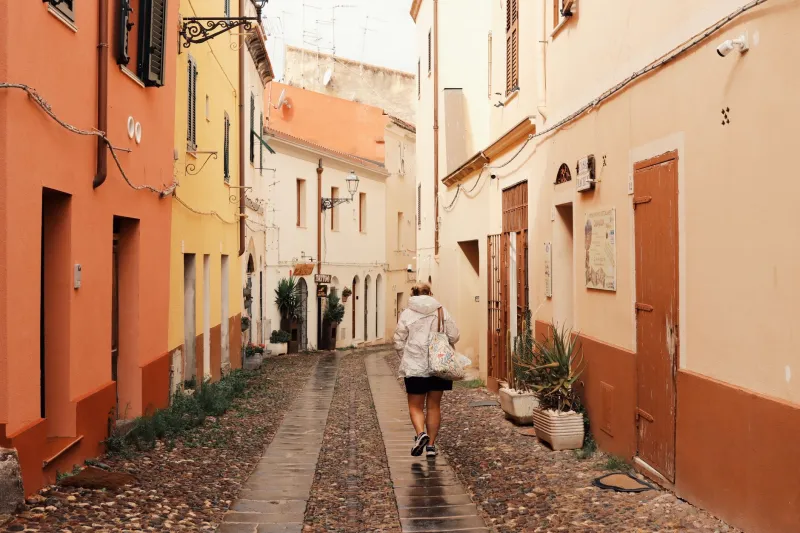
When every hour of your day is pre-scheduled, your brain shifts into execution mode. You're checking boxes, not absorbing experiences. But when you turn down an unmarked street because it looked interesting, you're suddenly present in a way that a packed itinerary rarely allows. You notice the smell of the bakery. You hear the argument happening two floors up. You see the mural that no guidebook has photographed yet.
This is what "Explore Boldly" actually means. It's not about doing extreme things. It's about staying open.
Practical Ways to Build Intentional Unplanning Into Your Trip
None of this means you should show up to a foreign country with nothing but a passport and a vague sense of optimism (though honestly, some people pull this off). It means building genuine white space into your days.
Leave one full day per week completely unscheduled. No reservations, no must-sees. Wake up and follow your instincts. Walk until something stops you.
Talk to the person behind the counter. Not the concierge — the person at the corner café, the guy running the fruit stand, the woman at the laundromat. Ask them what they'd do on a Saturday afternoon. You will get better recommendations than any app has ever given you.
Say yes to one thing per day that wasn't in the plan. It doesn't have to be dramatic. A spontaneous ferry ride. A random museum you walked past. A street market that appeared out of nowhere. Just one.
Resist the urge to immediately photograph everything. When you put the phone down, you're forced to actually be in the moment rather than documenting it for later. The memory you make without a photo is often the one that sticks.
The Fear Underneath the Over-Planning
Here's the uncomfortable truth: obsessive itinerary-building is often less about maximizing the trip and more about managing anxiety. Uncertainty is uncomfortable. Not knowing what's for dinner or whether the bus runs on Sundays feels risky in a way that a color-coded spreadsheet doesn't.
But travel — real, culturally immersive travel — is inherently uncertain. The discomfort is part of the deal. It's also, not coincidentally, the part that makes you grow.
The best travel stories never start with "and everything went exactly according to plan." They start with "so this completely unexpected thing happened." Give yourself the chance to have one of those stories. Leave some blank space on the calendar. Let the trip surprise you.
You've already done the bold thing by going. Now go a little further and let go of the wheel.